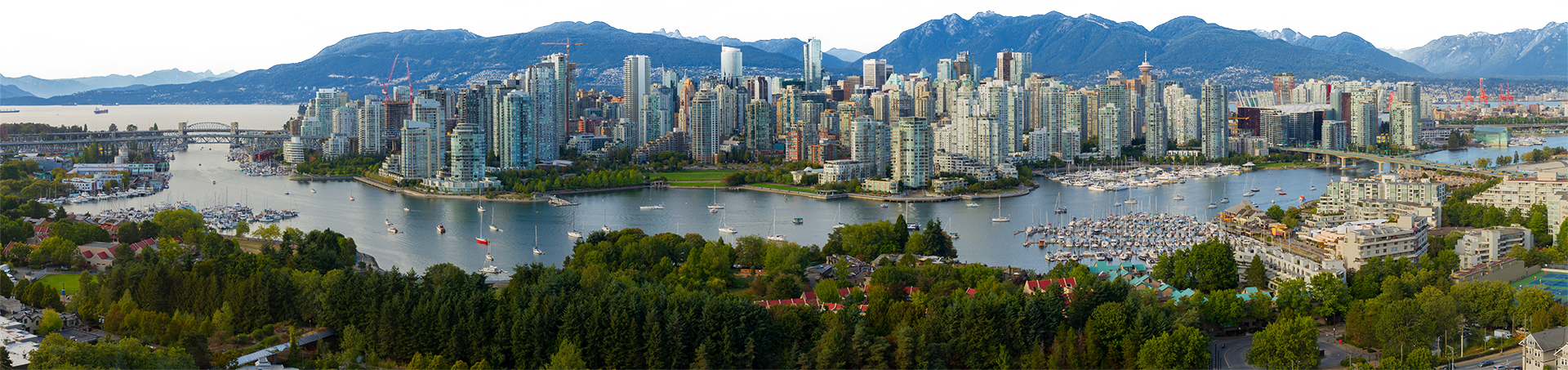
Bringing agriculture into the city.


Our cities are linear.
Food is imported.
Waste is exported.
Resources are lost.
It doesn’t need to be this way. The systems that feed our cities can be redesigned to give more than they take.
BY THE NUMBERS
The current system
can’t scale.
~1/3
of global greenhouse gas emissions come from food systems
Source: EDGAR-FOOD, 2021
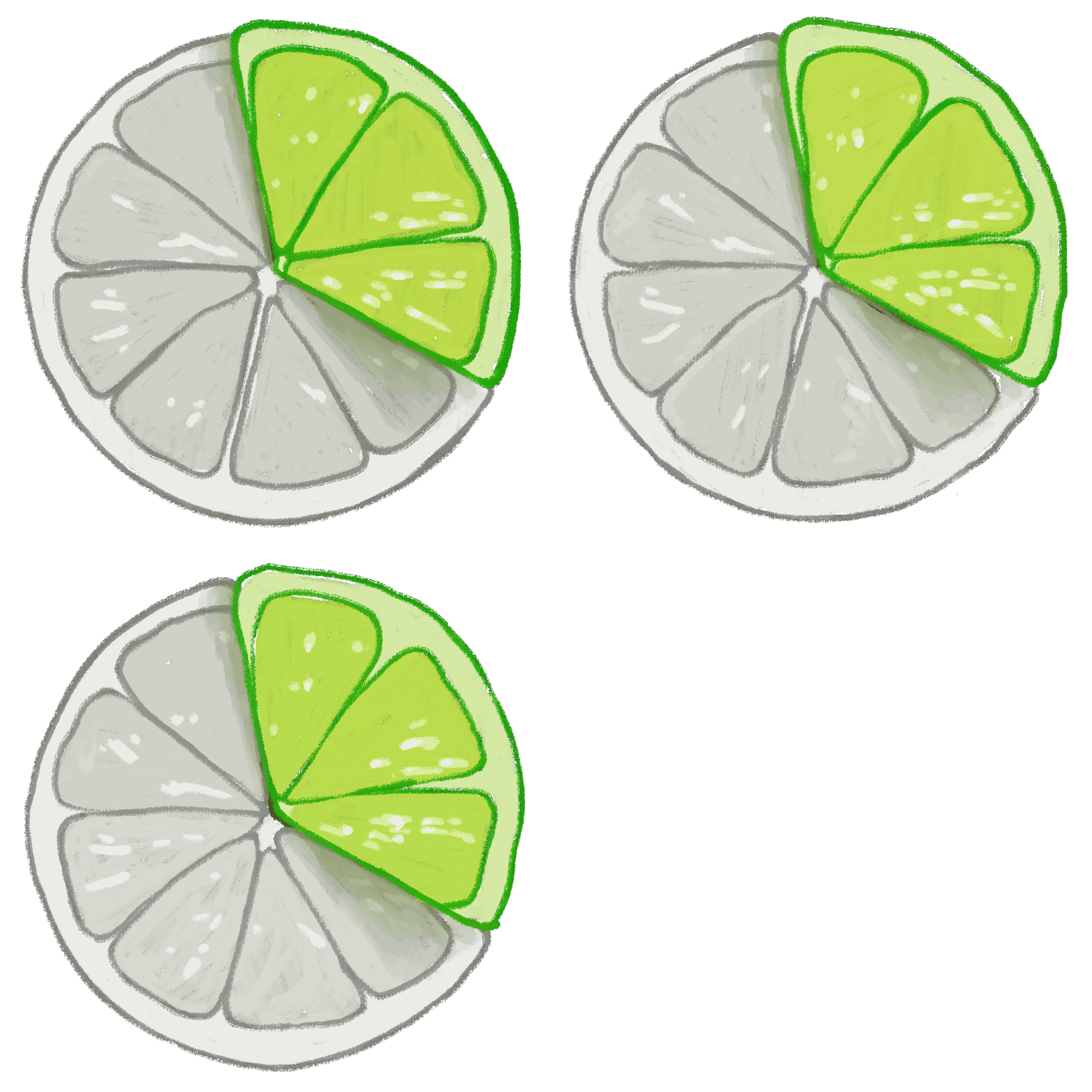
~1/2
of the world’s vegetated land is already farmed
Source: WRI, 2018

+56%
more food will be needed by 2050 — with no new farmland
Source: WRI, 2018

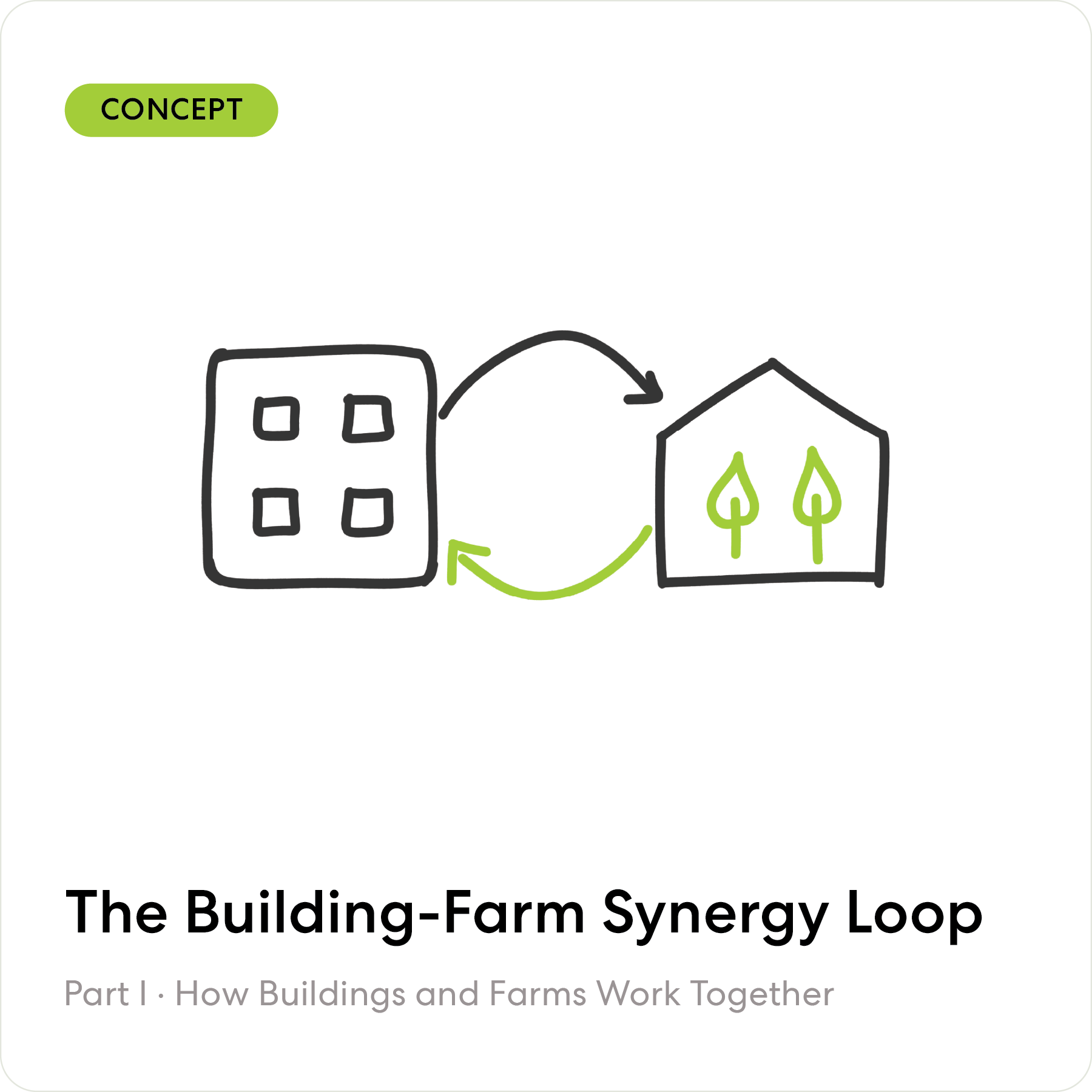
Instead of importing food and exporting waste, cities could close the loop.

What is Building-Integrated Agriculture?
Building-Integrated Agriculture (BIA) embeds farming directly into a building’s architecture and utility systems, transforming structures from resource consumers into producers. It involves:
Spatial Integration
Utilizing underused areas like roofs, facades, and controlled interiors for food production.
Resource Circularity
Upcycling building waste (heat, CO2, greywater) into farming inputs.
Operational Integration
Syncing agriculture with the building's mechanical, electrical, and plumbing systems for maximum efficiency.
Here’s how it works
The Circular Urban
Metabolism
KNOWLEDGE MATERIALS